Ukrainian President Volodymyr Zelensky on Friday described the billions in further funds approved by the European Union as a "great victory" for his country, even though allied leaders in Europe failed to agree on using frozen Russian assets to help Kiev.
The approval of the funds in the early hours of Friday was positive news for the Ukrainian people and at the same time a signal to Russia that a continuation of the war is not worthwhile, Zelensky said in Warsaw after meeting Polish President Karol Nawrocki.
After months of negotiations, the EU leaders meeting in Brussels agreed to offer Kiev an interest-free loan of €90 billion ($105.5 billion), which the EU would raise by taking on joint debt.
If Russia does not pay compensation for the damage that the war has done to Ukraine, Russian assets frozen in the EU will be used for repayment.
Countries including Belgium - where most of the frozen assets are held - had balked at the idea of using the Russian funds straight away to finance Ukraine, partly fearing it was not legal to do so or that Moscow could retaliate against private European citizens and companies.
Without new funding, Ukraine was at risk of running a deficit of €45 billion-€50 billion next year and of having to scale back its military production, Zelensky told leaders at the summit.
According to German Chancellor Friedrich Merz, the funds would be sufficient to cover military and budgetary needs of Ukraine for the next two years.
The United Kingdom's finance minister, Chancellor Rachel Reeves, welcomed the deal on Friday and said the UK's support for Ukraine remains "iron-clad."
"We will work with partners to urgently consider options to ensure that Ukraine gets the funding it needs," she said, according to the PA news agency.
Harsh words from Putin
Russian President Vladimir Putin had previously warned the EU not to use the frozen assets, and again described the idea as robbery on Friday.
Russia would continue to defend its interests and seek politically independent courts that would grant the claim for the return of the state billions frozen in the EU, Putin said at his annual marathon press conference and Q&A session. "Whatever they steal, at some point it must be returned," he said.
He focussed instead on the situation on the ground, predicting that the Russian forces would see "further successes" before the end of the year.
Scepticism from Munich Security Conference
The deal struck in Brussels to finance Ukraine without directly using frozen Russian assets represents a loss of credibility for the EU, former top German diplomat Wolfgang Ischinger said.
He acknowledged that the agreement gives Ukraine what it urgently needs, but at a "considerable price," he told Deutschlandfunk radio.
"Namely, the price of credibility, determination and the European Union's ability to act as a credible, internationally respected player. That has fallen by the wayside a little here," said Ischinger.
Ischinger for years led the Munich Security Conference and is acting head until Norway's Jens Stoltenberg takes up the role.
latest_posts
- 1
 Step by step instructions to Pick the Right Web-based Degree Program
 - 2Kids with smartphones by age 12 are at higher risk of health issues, study finds
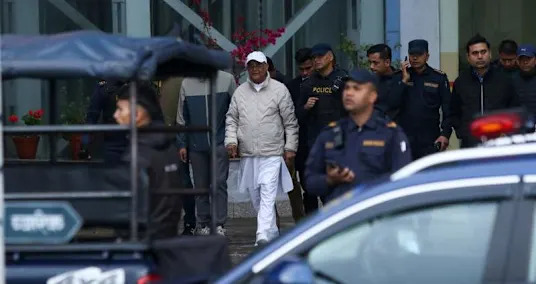
- 3Reports: Nepal's former PM arrested over deadly protest crackdown
- 4Remote Headphones: Improve Your Sound Insight
- 5He suddenly couldn't speak in space. NASA astronaut says his medical scare remains a mystery




- Astronomers detect rare 'free floating' exoplanet 10,000 light-years from Earth
- The newest 'Project Hail Mary' trailer shows Ryan Gosling befriending an alien in Phil Lord and Chris Miller's space epic
- Distributed storage Answers for Information Reinforcement
- How a toxic self-improvement trend with a funny name took over your feed
- Extraordinary Guinness World Records That Will Astound You
- Storm Goretti sweeps United Kingdom, France with winds over 120 mph
- EU states agree first step for Ukraine reparations fund
- Becoming Familiar with an Unknown dialect: My Language Learning Excursion
- Empathy and reasoning aren’t rivals – new research shows they work together to drive people to help more