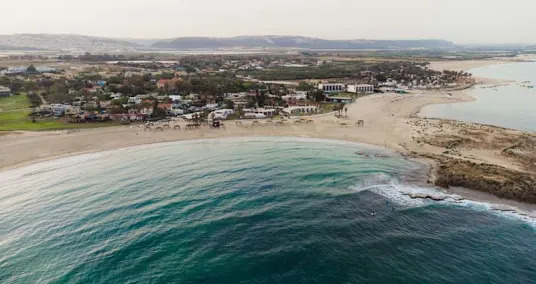
The discovery was made in an ancient shipwreck in the Dor Lagoon near the Carmel Coast, where archaeologists recovered nine pieces of unprocessed iron known as “blooms.”
Researchers from the University of Haifa said Wednesday that an underwater excavation off Israel’s northern Mediterranean coast uncovered what they described as the earliest known cargo of raw iron transported by ship, dating back around 2,600 years, Xinhua reported.
The discovery was made in an ancient shipwreck in the Dor Lagoon near the Carmel Coast, where archaeologists recovered nine pieces of unprocessed iron known as “blooms.” According to the university, the find provides direct evidence of how iron was transported in its earliest commercial stages.
The material was preserved in its original form, having solidified directly in a smelting furnace without undergoing forging or further refinement. Researchers said this distinguishes the cargo from later iron artifacts that typically show signs of shaping or tool-making.
Unlike copper and bronze, which could be melted into liquid form in ancient production processes, iron was heated with charcoal to produce a solid, porous mass. That mass was generally hammered to remove impurities and create denser material suitable for tools and implements.
The recovered blooms showed no indication of that secondary processing stage, suggesting they were transported immediately after production.

Earliest iron shipment discovered in ancient Mediterranean wreck
To determine the age and condition of the cargo, researchers conducted microscopic and chemical analyses.
Radiocarbon dating was also carried out on charred wood embedded in one of the pieces, helping confirm the timeline of the shipment. The findings were published in the journal Heritage Science.
Researchers said the cargo indicates that iron was being moved in raw form from production sites to other locations for further processing, pointing to a level of specialization in ancient manufacturing and trade networks in the Mediterranean.
The University of Haifa said the discovery provides new insight into early iron production and distribution practices in the region.
latest_posts
- 1
 Reveal Less popular Authentic Realities You Didn't Learn in School
 - 2Agricultural drones are taking off globally, saving farmers time and money
- 3Excelling at Discussion: Genuine Examples of overcoming adversity
- 4Cases of norovirus are on the rise just in time for the holiday season
- 5Figure out How to Recognize the Right Areas for 5G Pinnacles\



- New 'People We Meet on Vacation' trailer teases Poppy and Alex romance: Everything we know about the new Netflix movie
- Israel says 40 Hezbollah members killed as forces advance in Lebanon
- Israel's haredi draft crisis: Court ruling and political stalemate reach breaking point
- Sustaining Public activity and Connections: Key Methodologies
- Paraplegic engineer becomes the first wheelchair user to blast into space
- Early diagnosis leads King Charles to scale back cancer treatment in the new year
- Reactions as Artemis II astronauts lift off on historic lunar mission
- Charli xcx recorded original songs for 'Wuthering Heights' — what to know about the new album for Margot Robbie's film
- The 10 Most Famous Works of art Ever