When you buy through links on our articles, Future and its syndication partners may earn a commission.

SpaceX will launch an advanced ocean-mapping satellite from California early Monday morning (Nov. 17), and you can watch the action live.
The Sentinel-6B spacecraft is scheduled to lift off atop a Falcon 9 rocket from Vandenberg Space Force Base on Monday at 12:21 a.m. EDT (0521 GMT; 9:21 p.m. on Nov. 16 local California time).
You can watch the launch live here at Space.com courtesy of NASA, or directly via the space agency. Coverage will begin at 11:30 p.m. EDT on Sunday (Nov. 16; 0430 GMT on Nov. 17).

Sentinel-6B is part of the European Union's Copernicus Earth-observing program. The new satellite will measure sea surface heights around the globe with great accuracy, continuing the work of its predecessor, Sentinel 6 Michael Frelich, which launched atop a Falcon 9 in November 2020.
"Monitoring sea-level rise is high on the global agenda," European Space Agency (ESA) officials wrote in a Sentinel-6B mission description.
"In the past 25 years, the average height of the world's oceans has risen by almost 10 cm [4 inches], according to data from Copernicus," they added. "The Copernicus Sentinel-6 mission has become the gold standard reference mission to monitor and record this key consequence of climate change."
Sentinel-6B will do this work using a radar altimeter instrument developed by ESA. The satellite also carries a NASA-provided microwave radiometer, which will determine atmospheric water content, allowing for more accurate interpretation of the altimeter's results.
During its first year of observations, Sentinel-6B will work with Sentinel 6 Michael Frelich, "enabling greater accuracy with precise cross-calibration between the two instruments," ESA officials wrote about the mission, which is a collaboration among the European Commission, ESA, NASA, Eumetsat, and the U.S. National Oceanic and Atmospheric Administration, with support from the French space agency CNES.
If all goes according to plan on Monday morning, the Falcon 9's upper stage will deploy Sentinel-6B about 57 minutes after liftoff. The 3,175-pound (1,440 kilograms) satellite will then make its way to its science orbit, which lies 830 miles (1,336 kilometers) above Earth.
The Falcon 9's first stage, meanwhile, will come back to Vandenberg for a landing about nine minutes after liftoff. It will be the third flight for this particular booster; its previous two missions lofted batches of SpaceX's Starlink broadband satellites, according to the company.
latest_posts
- 1
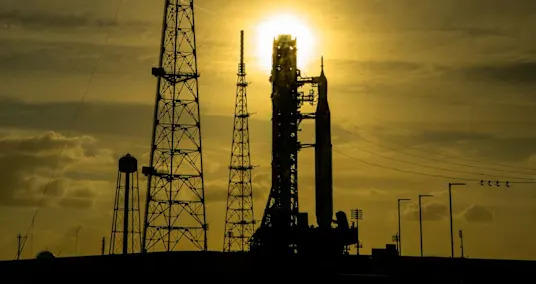
 NASA's Artemis 2 moon launch may be visible from Florida and southern Georgia today. Here's when to look
 - 2Russian strikes on Ukraine kill 5 people and wound 30 more
- 335 million tons of food go to waste yearly in the US. Experts share tips to help stop it
- 4Instructions to Pick the Right Gold Speculation Procedure: Exploring the Market
- 5Kona SUV: Exploring the Future with Hyundai's Visionary Hybrid



- Nikki Glaser returns as host of the 2026 Golden Globes: Everything the comedian has said about the upcoming awards show
- The Best Competitors of the 21st Hundred years
- Why this Iranian island looks like Mars after it rains
- German hauliers warn soaring energy prices may soon impact consumers
- Hamas propaganda expert explains Israel's internal conflicts influenced Hamas's Oct. 7 assault
- Jamie Dimon warns Iran war could drive inflation, interest rates higher
- Jupiter and the moon take a sunset stroll on March 26. Here's how to see it
- James Webb Space Telescope discovers a lemon-shaped exoplanet unlike anything seen before: 'What the heck is this?'
- Exclusive-Head of Pemex's production arm to step down in coming days, sources say