The Chinese government is set to ban people from storing the cremated remains of their loved ones in empty apartments instead of paying for expensive cemetery plots.
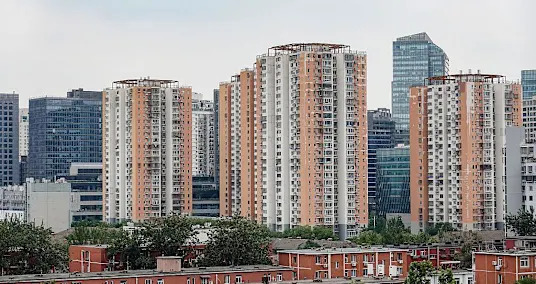
The new law will put an end to "bone ash apartments", which have risen in popularity as spaces in cemeteries remain scarce.
Low property prices in the country mean that for many, it is more affordable to entomb the ashes of relatives in an empty apartment than pay for funeral costs.
The legislation prohibits the use of residential properties "specifically for the placement of ashes" as well as the burial of remains outside of cemeteries and areas where ecological burial is legal.
Bone ash apartments are empty properties which are turned into ritual halls by family members of the deceased. Their loved one's ashes are placed inside and the space turned into an ancestral shrine.
The apartments are often identifiable by closed curtains or sealed-off windows, Chinese media has reported.
Mourners are making the most of low property prices, which have fallen in China in recent years and were down 40% in 2025 from 2021.
Meanwhile, cemetery spaces are limited and only come with a temporary lease which must be renewed every 20 years.
The price for a burial plot in Beijing's Changping Tianshou Cemetery ranges from around 10,000 yuan (£1,095) to 200,000 yuan (£21,917), according to its website. The cheaper options are "eco-friendly burial plots".
A standard tombstone plot starts at about 150,000 yuan (£16,400), with prices rising to 300,000 yuan (£32,841), which the website notes is "relatively high" in Beijing.
The price of funerals is also high. In 2020, funerals cost nearly half of the country's average annual salary, according to a survey by British insurance firm SunLife.
On social media, commentators have pointed out the cost of cemetery plots and queried how the new law will be regulated. One person wrote on Weibo, China's equivalent of X: "Who would resort to this if cemetery plots were affordable?"
Another said: "How will those enforcing these rules know if the apartments are being used just to store ashes? And how will they deal with those cases?"
The ban comes days before the Qingming Festival, also known as Tomb Sweeping Day, where people tidy the graves of loved ones and make ritual offerings.
On Tuesday, the State Administration for Market Regulation and the Ministry of Civil Affairs laid out new requirements for the funeral industry following concerns over high costs.
It said it would introduce new rules to tackle fraud and a lack of transparency in funeral pricing to "reduce the burden of funerals on the masses".
latest_posts
- 1
 Big majority in Germany call Berlin's efforts on gas prices too weak
- 2Ukraine proved this drone-killer works. Now, the West is giving it a shot.
- 3How to watch the 2025 Macy's Thanksgiving Day Parade for free
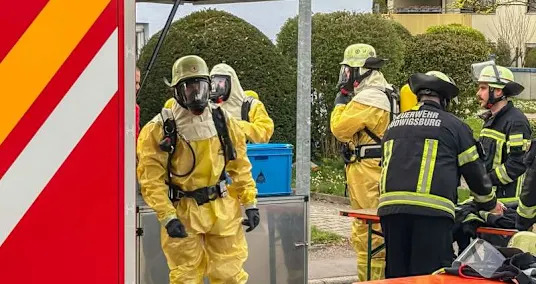
- 4Vial marked 'Polonium 210' sparks scare during German Easter egg hunt
- 5REWE launches seventh Pick&Go test store in Hanover


- Sudan war ‘being fought on women’s bodies’: Survivors detail sexual assault
- IAF intercepts over 90% of drones launched by Iran, Hezbollah during Operation Roaring Lion
- Best Wellness Tracker Keep You On target
- Exploring School Life: Self-awareness and Illustrations
- Giant ‘toothed’ birds flew over Antarctica 40 million to 50 million years ago
- Tech giants accused of not complying with Australian social media ban
- Woman gives birth on roadside after hospital allegedly sent her home: Family
- Arctic is again the hottest it's been in 125 years, with record-low sea ice, NOAA report says
- Instructions to Expand Your Advantages from an Open Record Reward