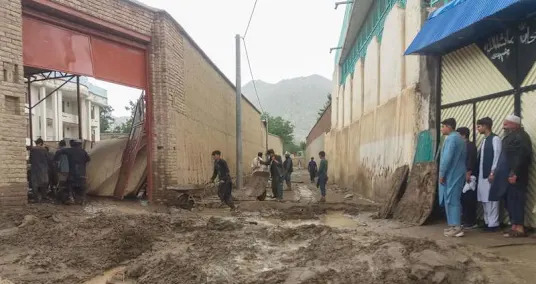
At least 61 people have been killed and 116 injured across Afghanistan since March 26 due to heavy rainfall, floods, landslides and lightning strikes, the Afghan government said on Saturday.
At least four people were still missing after floods affected thousands of families and damaged 2,448 houses, Afghan government spokesman Zabihullah Mujahid said in a post on X.
In addition, thousands of hectares of cropland was also destroyed, posing serious risks to rural communities who rely on agriculture for their livelihoods.
Deadly flooding has struck Afghanistan repeatedly in recent years, causing significant loss of life, injuries and widespread damage to homes, infrastructure and agricultural land.
Extreme weather events such as flash floods and droughts are increasing in Afghanistan, which experts link to the climate crisis.
Despite having a negligible carbon footprint, the country ranks among the most climate-affected nations and remains ill-prepared to cope after decades of conflict, poor infrastructure and a struggling economy, compounded by recent earthquakes and severe flooding.
latest_posts
- 1
 Miley Cyrus flashes a diamond ring on the red carpet, sparking engagement rumors with Maxx Morando: A timeline of their four-year relationship
- 2Portugal among EU countries with the most people working close to 50 hours a week
- 3Figure out How to Pick a SUV with Senior-Accommodating Tech Elements
- 4Instructions to Expand Your Smash 1500's Presentation: Tips and Deceives
- 5Which Exhibition hall Do You Suggest? Vote




- Would you ever turn to AI for companionship? 6% of Americans say they could — or already have.
- Saucony's $125 'Comfy, Stylish' Sneakers Are Now $55
- What will the Artemis 2 astronauts eat during their historic moon mission? (video)
- Pick Your Favored kind of soup
- Careful Living: Embracing the Current Second
- Vote in favor of your Number one Kind of Gems
- Mountain Trekking on a Tight spending plan: Tracking down the Right Bicycle
- Slovakia rejects EU call to scrap higher fuel prices for foreign cars
- How stripping diversity, equity and inclusion from health care may make Americans sicker