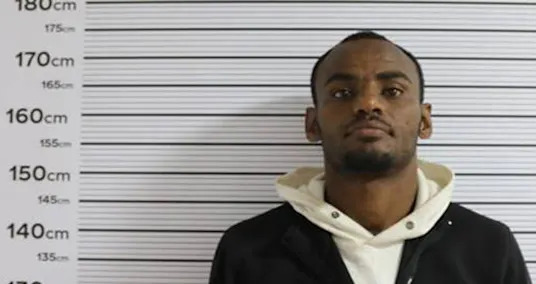
Police in Ethiopia have arrested a man accused of being at the centre of a multi-million-dollar international human trafficking ring that since 2018 has lured thousands of people to Libya, where they hoped to travel on to Europe.
Yetbarek Dawit is alleged to have operated five detention warehouses in Libya, torturing migrants there to try and force their relatives to send extra money.
He was detained along with nine of his alleged accomplices in northern town of Shire, according to police. They are yet to be charged in court.
Police say testimonies collected so far suggest the network has been involved in the deaths of more than 100 people and the sexual abuse of more than 50 women.
The arrests were the result of a complex and cross-border investigation, the police said, involving an organisation called the Regional Operational Centre (Rock) - set up to tackle smuggling networks in East Africa and funded by the European Union.
Warning: This story contains details some may find distressing.
Photos of suspects - seven men and three women - taken after their arrest in Shire, which is in the northern region of Tigray and borders Eritrea and Sudan, were posted on the Ethiopian Federal Police's Facebook page.
The traffickers are alleged to have transported more than 3,000 mainly young people from Djibouti, Eritrea, Ethiopia, Kenya, Somalia and Sudan to Libya using various routes.
According to the police, Yetbarek is wanted internationally and uses a variety of aliases:
"Adhanom" in Sudan
"Ahmed" in Djibouti and Somalia
"Munir" in Kenya
"Kibrom" in Sweden and other European countries.
Armed with these names, investigators had been able to use advanced technology to track down Yetbarek, the police said.
The bank accounts of Yetbarek and his accomplices had been frozen and the properties belonging to the group confiscated, it added.
Testimonies gathered from more than 100 alleged victims and their families living in Ethiopia, Libya, the Netherlands, Switzerland, the UK and Canada had also aided the investigation, the police said.
They told of the gruesome experience of those held in the warehouses in Libya - allegedly forced to contact their families to send more money to the traffickers.
Those who could not pay were allegedly given food only once a day and were subjected to extreme torture.
This allegedly included beatings with rubber, sticks and electric wires, being chained by their hands and feet, and having melted plastic dripped on to their bodies.
Women were allegedly subjected to sexual violence, also resulting in severe physical and psychological injuries.
The group is believed to have generated more than $19m (£14m) through these criminal activities, according to the police.
Following their arrest in Tigray, the 10 suspects were taken on Monday to the capital, Addis Ababa.
You may also be interested in:

Go to BBCAfrica.com for more news from the African continent.
Follow us on Twitter @BBCAfrica, on Facebook at BBC Africa or on Instagram at bbcafrica
BBC Africa podcasts
latest_posts
- 1
 The Force of Positive Reasoning: Day to day Attestations
 - 2Europe pledges over €15bn for clean energy for Africa
- 3Top Pastry: What's Your Sweet Treat of Decision?
- 4A Gustav Klimt painting is now the most expensive piece of modern art sold at auction. The fascinating history behind the $236 million 'Portrait of Elisabeth Lederer.'
- 5Ancient fire discovery marks significant milestone in human history


- Hostile to Maturing Skincare Items to Rejuvenate Your Skin
- I watched more than 500 new movies this year. These are the 25 best ones.
- An Excursion Through Renowned Western Network programs
- A few Exemplary Chinese Dishes, Which Are Famous Around the world
- Careful Nurturing: Techniques for Bringing up Tough Children
- Flu cases are spiking earlier than usual. What you need to know.
- NASA set to launch Artemis 2 moon mission today, the 1st crewed lunar flight since 1972
- Novartis to build manufacturing hub in North Carolina, creating 700 jobs
- Oprah Winfrey's Favorite Wellness Destination Is A Luxurious Italian Retreat